What Is Accounts Receivable? Definition, Examples & How It Works
Accounts receivable explained in plain English — definition, real examples, journal entries, AR aging, DSO formula, and how to manage it for healthy cash flow.
Quick Answer
Accounts receivable (AR) is the total amount of money owed to a business by its customers for goods or services that have been delivered but not yet paid for. It is recorded as a current asset on the balance sheet under accrual accounting. AR is created when an invoice is sent and settled when the customer pays.
Accounts receivable is the money your customers owe you — but only the businesses that track it carefully turn it into cash before it ages into bad debt.
Table of contents
What Is Accounts Receivable?
Accounts receivable (often abbreviated as AR or A/R) is the money customers owe a business for products or services delivered on credit. It appears on the balance sheet as a current asset because the business expects to convert it to cash — typically within 30 to 90 days.
AR only exists under accrual accounting. Cash-basis businesses skip it entirely because they only record revenue when cash arrives.
How Accounts Receivable Works
The AR lifecycle is three steps: (1) deliver goods or services to a customer, (2) send an invoice with payment terms (Net 15, Net 30, etc.), and (3) collect payment. Between steps 2 and 3, the amount sits in accounts receivable.
If the customer pays on time, AR converts cleanly to cash. If they're late, the invoice ages — and the older it gets, the less likely it is to be collected.
Accounts Receivable Example
Acme Studio finishes a $4,000 branding project for a client on April 1 with Net 30 terms. The accountant records:
- April 1: Debit Accounts Receivable $4,000 / Credit Revenue $4,000
- April 28: Client pays. Debit Cash $4,000 / Credit Accounts Receivable $4,000
For those 27 days, the $4,000 lives in AR. Acme has earned the revenue but doesn't have the cash yet.
AR Aging Reports
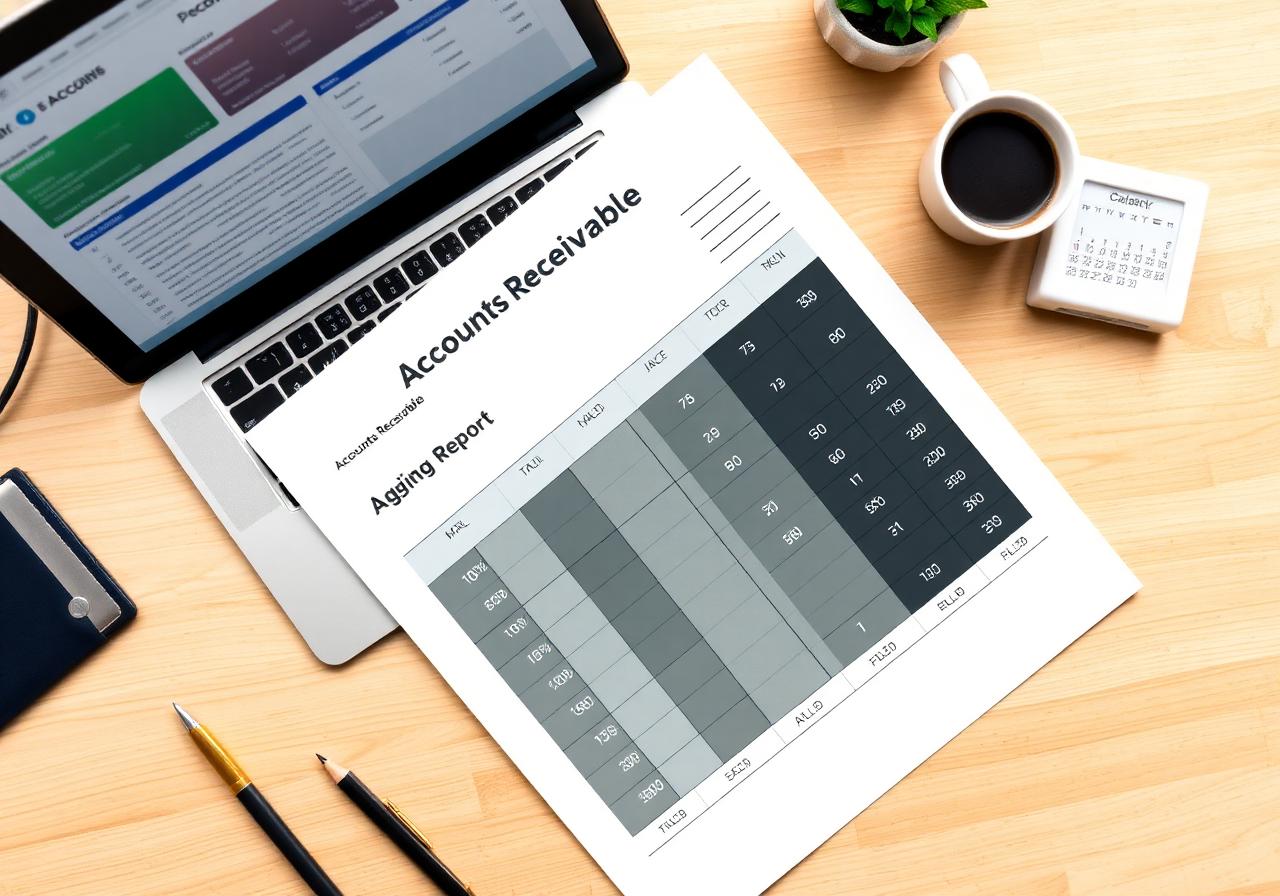
An AR aging report groups unpaid invoices by how long they've been outstanding — usually 0–30 days, 31–60, 61–90, and 90+. It's the single most useful AR document.
Watch the older buckets. A growing 60+ bucket means collections are slipping. Anything in 90+ should be actively pursued or written off as bad debt.
Days Sales Outstanding (DSO)
DSO measures how fast you collect AR on average. Formula: (Accounts Receivable ÷ Total Credit Sales) × Number of Days in Period.
A DSO of 30 means you collect in roughly 30 days. A DSO of 60 means customers are taking twice as long — and your cash flow is suffering.
How to Manage Accounts Receivable
Three habits cover 90% of good AR management: (1) invoice same-day the work is delivered, (2) embed online payment links in every invoice, and (3) send automated reminders at 3 days past due, 14 days, and 30 days. The rest is consistency.
Best Ways to Get Started
- →
Invoice the same day work is delivered
Cuts DSO by 20–30%. Block 15 minutes daily.
- →
Offer one-click online payment
Stripe, Square, or your accounting software's native link. Most are paid in 1–3 days.
- →
Run AR aging weekly
Spot slipping accounts before they hit 60+ days.
- →
Send automated reminders
Built into all major accounting software. Set and forget.
Step-by-Step Plan
- 01
Deliver the work
Invoice is only valid for work completed.
- 02
Send the invoice same-day
Include due date, payment terms, and a payment link.
- 03
Track in AR subledger
Accounting software does this automatically.
- 04
Send reminder 3 days before due
Eliminates most 'forgot' cases.
- 05
Follow up on day 1, day 14, day 30 past due
Escalating tone — friendly, firm, formal.
- 06
Write off bad debt at 90+ days
If realistically uncollectible, write off to clean the books.
AR Aging Report Example — Acme Studio
| Customer | 0–30 Days | 31–60 Days | 61–90 Days | 90+ Days | Total |
|---|---|---|---|---|---|
| Client A | $4,000 | $0 | $0 | $0 | $4,000 |
| Client B | $1,200 | $2,500 | $0 | $0 | $3,700 |
| Client C | $0 | $800 | $1,500 | $0 | $2,300 |
| Client D | $0 | $0 | $0 | $3,200 | $3,200 |
| Total | $5,200 | $3,300 | $1,500 | $3,200 | $13,200 |
Mistakes to Avoid
- ✗Recording AR when payment arrives instead of when the invoice is sent.
- ✗Letting invoices sit a week before sending them.
- ✗Ignoring the AR aging report until quarter-end.
- ✗Never writing off true bad debt — distorts the balance sheet.
- ✗Confusing AR with revenue. AR is the unpaid portion; revenue is the full amount earned.
Pro Tips Advanced
- ★Add a 1.5% monthly late fee on invoices over 30 days past due.
- ★Offer a 2% early-payment discount for clients who pay within 10 days (Net 10 1/10).
- ★Send a thank-you email when invoices are paid — improves future on-time rates.
- ★Group small recurring customers under a single monthly invoice to reduce AR volume.
Frequently Asked Questions
Sources
- • Publication 334: Tax Guide for Small Business — Internal Revenue Service
- • Generally Accepted Accounting Principles (GAAP) — Financial Accounting Standards Board
- • Small Business Financial Management — U.S. Small Business Administration
All articles are reviewed for factual accuracy by a credentialed accounting professional before publication.
Elena is a Certified Public Accountant with 14 years of experience advising small businesses on bookkeeping systems, tax planning, and financial controls. She previously led the small business advisory practice at a regional accounting firm.