Small Business Accounting Basics: The Complete 2026 Guide
Master small business accounting basics fast. Learn the five accounts, cash vs accrual, the three core reports, and a 6-step starter plan — in plain English.

Quick Answer
Small business accounting basics cover five account types (assets, liabilities, equity, revenue, expenses), one of two methods (cash or accrual), and three reports (income statement, balance sheet, cash flow). Start by separating personal and business finances, then record every transaction and reconcile monthly.
Small business accounting is the system you use to track money in, money out, and what your business is worth. Get the basics right and you'll make faster decisions, file cleaner taxes, and sleep better at night.
Table of contents
What Is Small Business Accounting?
Small business accounting is the process of recording, classifying, and reporting every financial transaction in your business. It answers three questions: How much did you earn? How much did you spend? What is the business worth right now?
Bookkeeping is the daily recording. Accounting is the bigger system that turns those records into reports you can act on. Every transaction touches at least two accounts — this is called double-entry accounting, and it's the standard for accurate books.
Done right, accounting takes 1–3 hours per week for most small businesses and saves you days at tax time.
The 5 Account Types Every Owner Must Know
- Assets — what you own (cash, equipment, money customers owe you).
- Liabilities — what you owe (loans, unpaid bills, credit card balances).
- Equity — the owner's stake (assets minus liabilities).
- Revenue — money earned from sales or services.
- Expenses — costs of running the business.
Together these form your chart of accounts — the master list every transaction gets sorted into. Keep it lean: 20–40 accounts is enough for most small businesses.
The 3 Reports That Actually Matter
Income Statement — Revenue minus expenses over a period. Tells you if you made a profit.
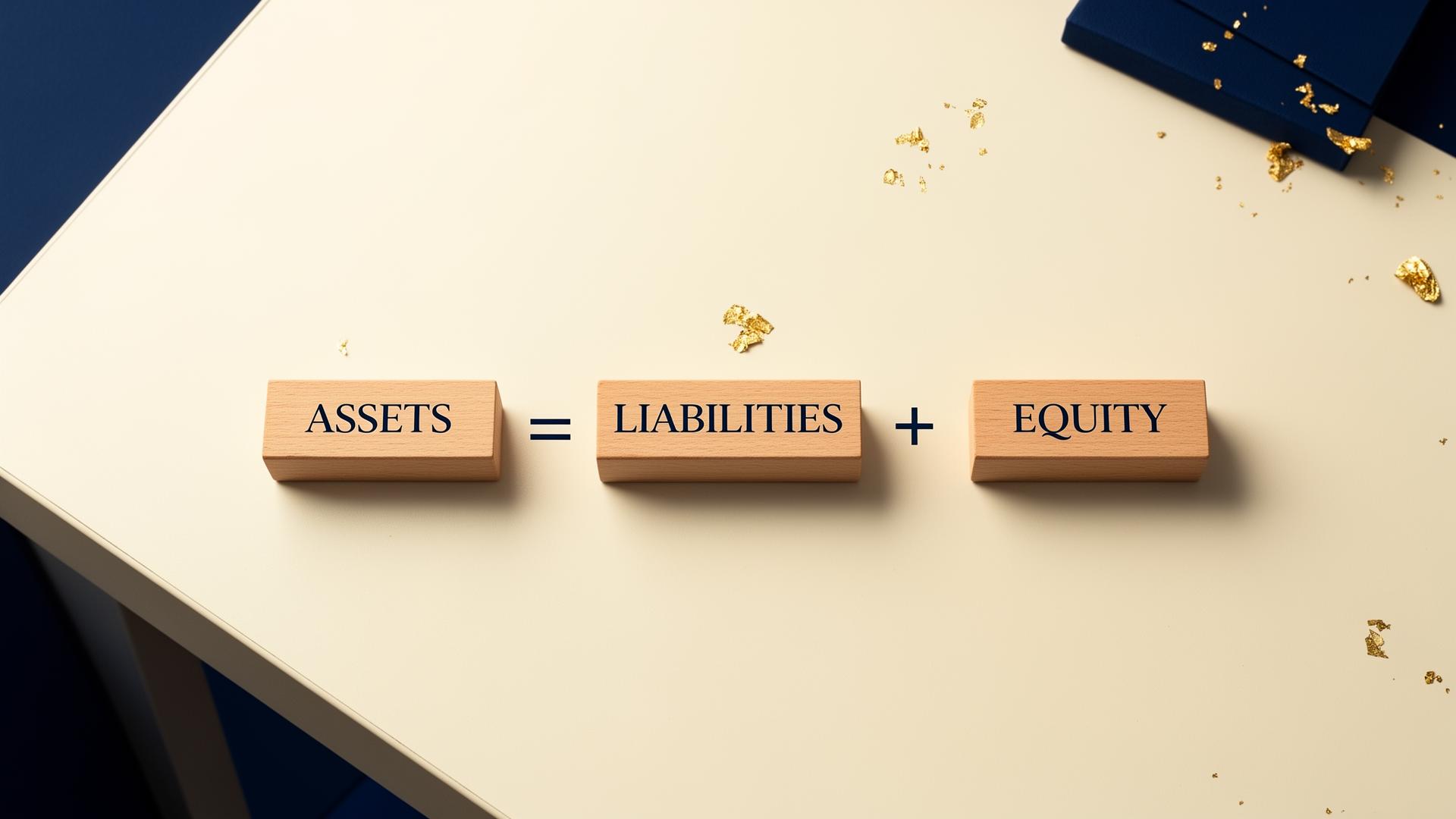
Balance Sheet — A snapshot of assets, liabilities, and equity on a specific day. Always balances: Assets = Liabilities + Equity.
Cash Flow Statement — Tracks cash moving in and out across operating, investing, and financing activities. Profit and cash are not the same thing — this report shows the difference.
Review all three monthly. Compare to the prior 3 and 12 months to spot trends early.
Best Ways to Get Started
- →
Open a dedicated business bank account
Stop mixing personal and business money. This is the single biggest source of small business accounting headaches.
- →
Pick one accounting method and stick to it
Cash basis if you're under $25M in revenue and don't carry inventory. Accrual otherwise.
- →
Use cloud accounting software early
Tools like QuickBooks, Xero, or Wave automate bank feeds, categorization, and reports.
- →
Reconcile monthly, never quarterly
Match every transaction to your bank statement once a month. Catches errors while they're still fixable.
- →
Save digital copies of every receipt
Snap photos with your phone. The IRS accepts digital records for most expenses.
- →
Schedule a 30-minute monthly review
Look at your income statement, top expenses, and cash balance. That's it. Consistency beats complexity.
Step-by-Step Plan
- 01
Open a business checking account
Use it for every business transaction, no exceptions. Add a business credit card if you can qualify.
- 02
Choose your accounting method
Cash basis for simplicity. Accrual if you carry inventory, invoice customers, or plan to seek financing.
- 03
Set up your chart of accounts
Group accounts under the 5 categories. Start with the template your accounting software provides.
- 04
Record every transaction promptly
Weekly at minimum. Capture date, amount, category, vendor or customer, and a short note.
- 05
Reconcile bank and credit card statements monthly
Match each recorded transaction to the statement. Investigate anything that doesn't match.
- 06
Review your three reports each month
Block 30 minutes. Compare revenue, expenses, and cash to the prior month and same month last year.
- 07
Back up records and meet with a CPA yearly
Cloud software handles backups. A yearly CPA review catches tax-saving opportunities you'd miss alone.
Cash Basis vs Accrual Basis Accounting
| Method | Benefits | Drawbacks | Best For |
|---|---|---|---|
| Cash Basis | Simple, intuitive, matches bank balance | Doesn't show unpaid invoices or upcoming bills | Solo service businesses, freelancers, under $25M revenue |
| Accrual Basis | Accurate picture of profit, matches revenue to costs | More complex, requires tracking AR and AP | Inventory businesses, larger firms, anyone seeking loans |
| Modified Cash | Hybrid simplicity with some accrual accuracy | Not GAAP-compliant, less standard | Professional service firms with simple fixed assets |
Mistakes to Avoid
- ✗Mixing personal and business transactions in the same account.
- ✗Waiting until tax season to update your books.
- ✗Coding capital purchases (equipment, vehicles) as regular expenses.
- ✗Skipping monthly bank reconciliation.
- ✗Forgetting to track owner draws separately from business expenses.
- ✗Trusting your bank balance instead of your books.
- ✗Not backing up spreadsheet-based records.
Pro Tips Advanced
- ★Set a recurring calendar block — first Monday of each month — for reconciliation and review.
- ★Use rules in your accounting software to auto-categorize recurring transactions.
- ★Pay yourself a consistent owner draw or salary; it makes cash flow predictable.
- ★Build a 3-month cash reserve before expanding marketing or hiring.
- ★Ask your CPA in November (not April) about year-end tax moves.
- ★Track gross profit margin monthly — it's the fastest signal of pricing problems.
Frequently Asked Questions
Sources
- • Publication 334: Tax Guide for Small Business — Internal Revenue Service
- • Generally Accepted Accounting Principles (GAAP) — Financial Accounting Standards Board
- • Small Business Financial Management — U.S. Small Business Administration
All articles are reviewed for factual accuracy by a credentialed accounting professional before publication.
Elena is a Certified Public Accountant with 14 years of experience advising small businesses on bookkeeping systems, tax planning, and financial controls. She previously led the small business advisory practice at a regional accounting firm.